

Not all coatings last forever. Learn the warning signs of coating failure on metal roofs and what to do next.
Metal roofs are known for their durability, energy efficiency, and long-term performance—but even they need a little help standing up to decades of harsh Texas sun, hail, and humidity. That’s where roof coatings come in.
At Shepherd Metal Roofing, we often work with DFW and East Texas property owners who rely on coatings to extend the lifespan of aging metal roofs. But what many don’t realize is: coatings aren’t a one-time solution. Like any protective layer, they can fail over time—and if left unchecked, that failure can lead to corrosion, leaks, and expensive repairs.
So how do you know when your metal roof coating is no longer doing its job?
Here’s how to spot coating failure—and what steps to take next to protect your building.
Why Coatings Matter for Metal Roofs
Before diving into warning signs, let’s recap why metal roof coatings are important in the first place.
These elastomeric or silicone-based membranes are applied to existing metal panels to:
- Seal seams and fasteners
- Improve waterproofing
- Reflect UV rays and reduce heat absorption
- Prevent corrosion and rust
- Prolong the life of the roof system by 10–20 years
Coatings are especially popular in commercial settings where full roof replacements are costly and disruptive—such as warehouses, retail centers, or churches in Dallas, Fort Worth, or Longview.
But even high-quality coatings need to be monitored over time.
Top Warning Signs of Coating Failure
If your roof is 10+ years old or recently coated, watch for these red flags.
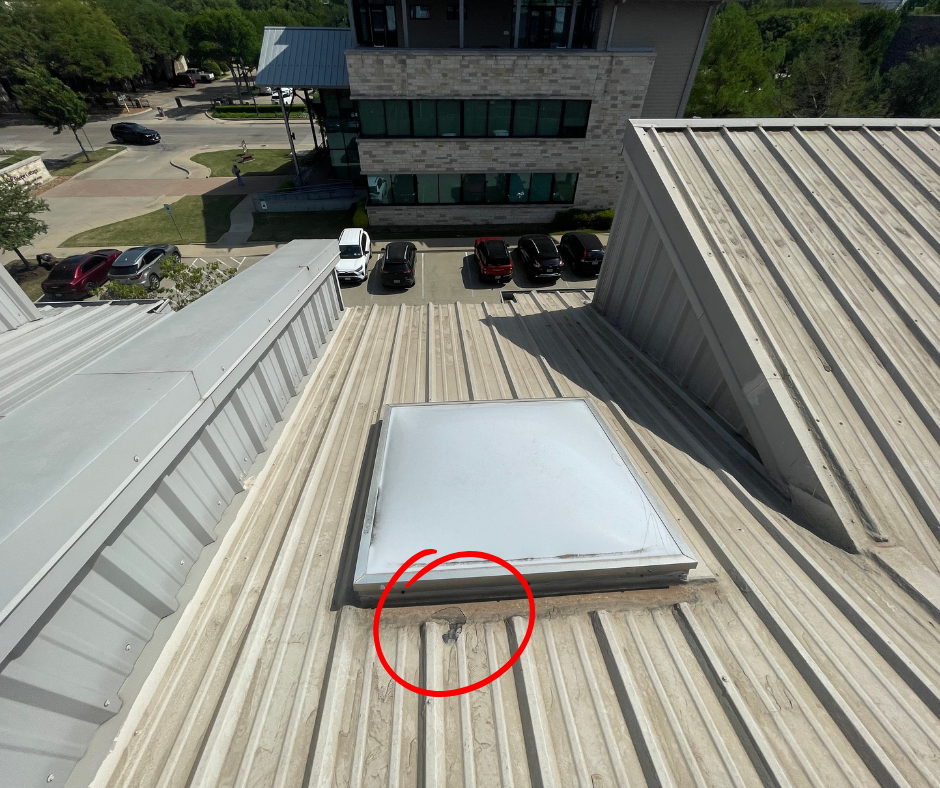
Peeling or Flaking
If your roof coating is peeling in strips or flaking like old paint, that’s a clear sign of adhesion failure. It often starts around:
- Fasteners
- Seams
- Skylights or vents
- Gutters or drains
This exposes the metal to water, which can lead to rust and eventual structural damage.
Blistering or Bubbling
Blisters or air pockets under the coating indicate trapped moisture or poor surface prep when the coating was first applied. These areas will eventually crack, allowing water to penetrate beneath the surface.
Chalking or Fading
While some fading is expected over time, chalky residue or severe color changes may indicate UV breakdown of the coating. This compromises reflectivity and thermal protection—key benefits of reflective white or silicone coatings.
Cracking
If you see hairline or spider cracks forming in the coating—especially near edges or penetrations—it’s likely due to age, thermal expansion, or faulty application. Cracks may allow water in even if they look minor.
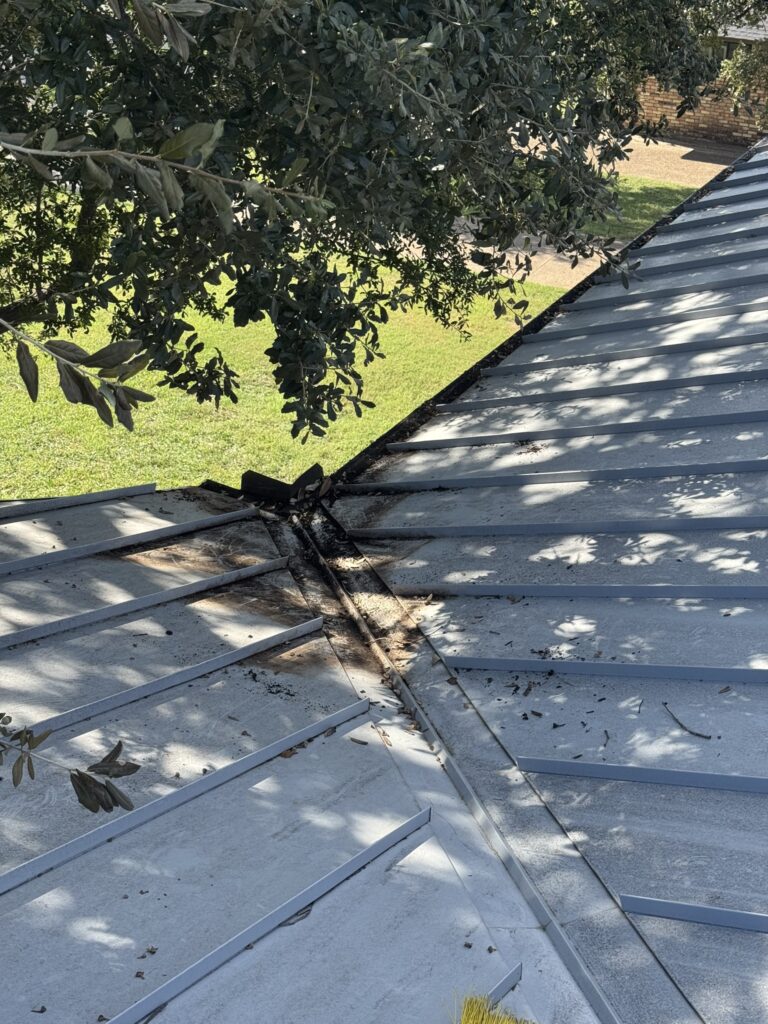
Leaks or Ponding
Coating systems should improve waterproofing. If you notice:
- New roof leaks
- Water stains on ceiling tiles
- Ponding water on low-slope areas
…it’s likely that your coating system is no longer performing as intended.
Why Coatings Fail
There are several common reasons why roof coatings fail prematurely:
- Improper surface preparation before application
- Low-quality product used to cut costs
- Weather exposure during installation (humidity or rain)
- Inadequate thickness or missed coverage during spraying
- Age and wear, especially after hail or high winds common in DFW storms

What to Do Next
If you suspect your metal roof coating is failing, don’t wait until major leaks appear.
Here’s what we recommend:
1. Schedule a Roof Inspection
A professional roofing contractor (like our team at Shepherd Metal Roofing) can assess:
- Extent of coating degradation
- Whether repairs, recoating, or full replacement is best
- Structural condition of panels and seams
- Moisture penetration under the coating
📍 We offer free inspections across Dallas–Fort Worth, Waxahachie, and McKinney, TX.
2. Consider Recoating
If the damage is isolated and the roof is still structurally sound, recoating may be a cost-effective solution. We often recommend:
- Silicone roof coatings for their UV resistance and waterproofing
- Acrylic coatings for budget-conscious commercial properties
- Butyl-based tapes and primers for reinforcing seams and penetrations
📖 Learn more about our commercial roof coatings →
3. Repair Before Recoating
If your coating has failed in key areas (vents, curbs, skylights), those should be properly repaired before applying a new system. Recoating over cracked or loose areas will only trap damage below.
4. Plan for Replacement (if needed)
Sometimes, the underlying roof has aged beyond recovery. If rust is widespread or panels are buckling, a metal retrofit or new standing seam system might be the smarter investment.
Our team will walk you through honest, no-pressure recommendations based on what’s best for your long-term ROI.
Why Work With Shepherd Metal Roofing?
We’re a local, family-owned roofing company serving DFW, Waxahachie, Tyler, and surrounding cities. We specialize in metal roof restoration and coating systems for commercial and residential buildings.
What sets us apart:
- Certified by Mule-Hide and other top manufacturers
- Members of the National Roofing Contractors Association (NRCA)
- Coating system warranties up to 20 years
- Local crews, fast turnaround, and fair pricing
📍 Serving Dallas–Fort Worth, Irving, McKinney, Waxahachie & surrounding cities
📞 Call us at (972) 256-8817